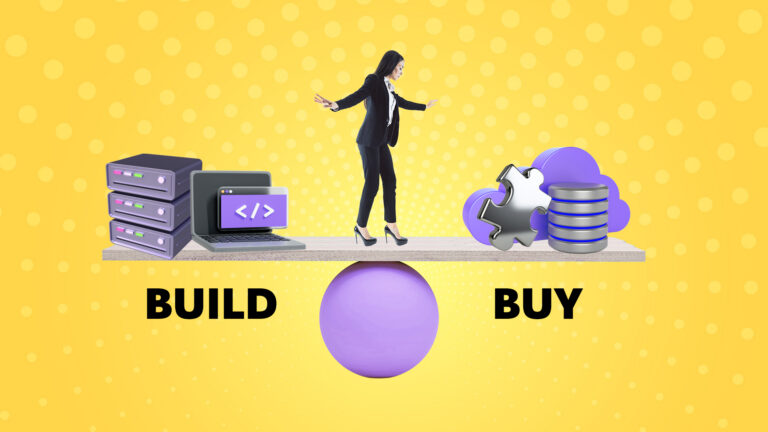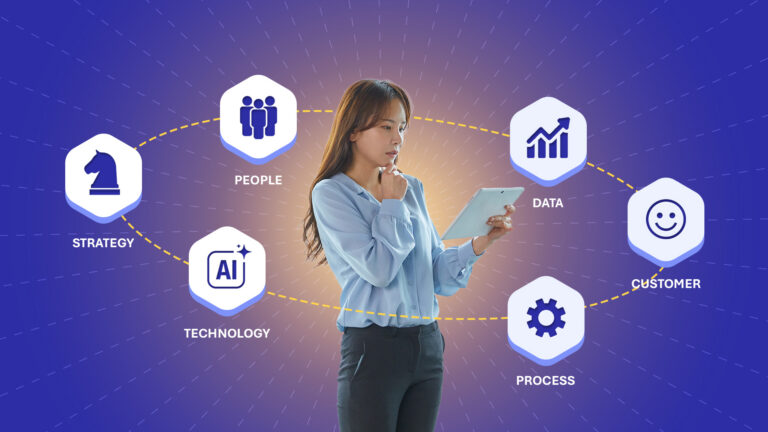
The tech sector is nursing a trillion-dollar hangover from the “SaaSpocalypse”—a brutal market realignment that recently wiped out an aggregate $1 trillion in public SaaS valuation, forcing IT leaders to completely rebuild their stacks using a rigorous Decision Matrix for Enterprise Software. The casualties weren’t minor players, either. HubSpot plummeted 51% from its peak, Monday.com dropped 44%, and ServiceNow contracted by more than a third.
This wasn’t a random market glitch. It was a referendum on the traditional, bloated seat-count subscription model.
For a long time, enterprises quietly tolerated the “SaaS tax.” But as corporate tech budgets aggressively pivot toward autonomous AI workflows and agentic architectures, paying top-dollar subscription fees for rigid, seat-restricted software makes zero financial sense.
Compounding the problem is rampant vendor inflation. Enterprise software costs are currently climbing at five times the consumer baseline of G7 economies, driven by vendors forcing 11% to 14% annual price increases—often disguised behind bundled, half-baked AI features.
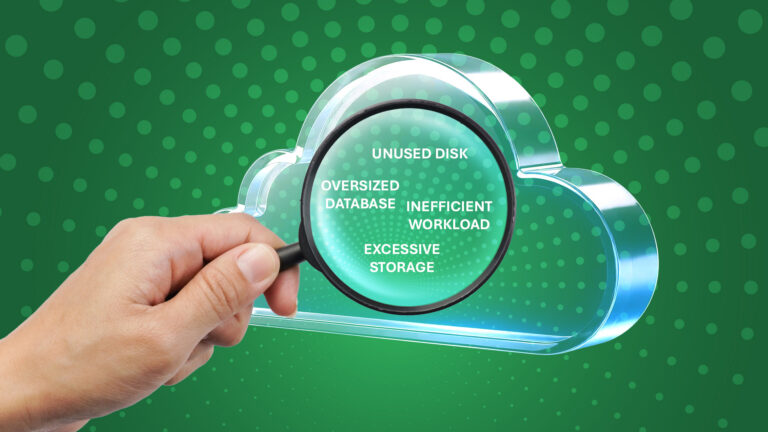
Meanwhile, software telemetry shows that 51% of purchased SaaS licenses go completely untouched for 90 days or more. That is $18 million in annual waste for a typical enterprise. Throw in the fact that unmanaged “shadow IT” accounts for more than half of all business apps, and it’s clear that technology leaders need a definitive framework to decide when to buy, and when to build.
The Real Cost of Software Sprawl
| Operational Metric | Market Baseline | Strategic Enterprise Threat |
| SaaS Price Inflation | 11% to 14% annual hikes | Severe erosion of IT operational margins |
| SaaS License Waste | 51% of purchased seats are inactive | Up to $18 million in annual capital loss |
| Application Swarm | Average of 291 SaaS apps per enterprise | Deep security flaws and integration silos |
| Context Switching Drain | 1,200 app toggles per worker daily | Loss of 9% of the productive workday |
| AI Integration Barriers | 95% of IT leaders cite connection limits | Total failure to leverage cognitive AI models |
COTS vs. Bespoke
To build a real strategy, we have to look past the marketing fluff and define the two operational paths cleanly.
Off-the-Shelf (COTS) Software: These are ready-made, pre-packaged platforms engineered for the masses. COTS gives you immediate deployment and lower initial setup costs, but it forces your business into a box. You don’t own the product; you are renting someone else’s workflow. If your business process doesn’t fit their template, your team has to change how they work to accommodate the software.
Bespoke Custom Software: This is software built from scratch, explicitly tailored to your internal workflows, compliance frameworks, and long-term goals. You own the intellectual property, the source code, and the roadmap. If the market shifts, you pivot instantly. You aren’t stuck waiting for a third-party vendor to put your feature request on their next quarterly release cycle.
The decision comes down to strategic differentiation. Commodity operations—like a general ledger, standard payroll, or internal chat—look the same across almost every industry. They offer no competitive edge, so buying a standard commercial tool is the smartest move.
But if a process directly touches your customer experience, secures a proprietary operational advantage, or handles core proprietary data, forcing it into a generic platform kills your edge. Custom software turns that unique workflow into a barrier to entry that competitors can’t easily clone.
The Hidden Drag of Feature Bloat and Disconnected Data
Modern enterprises are drowning in application clutter. The Standish Group data reveals that in a typical packaged corporate application, only 20% of the built features are used frequently. The other 80% are rarely or never touched. In short, four-fifths of your licensing budget is funding feature bloat you don’t want and your employees don’t use.
This over-engineering backfires heavily on productivity. The average employee now juggles 11 to 13 distinct tools every single day, bouncing between screens and login portals up to 1,200 times. This constant context-switching kills roughly 9% of the productive workday, quietly draining $10,000 to $11,000 per employee in lost efficiency every year.
Worse, these tools operate as isolated islands. The average enterprise runs nearly 900 unique apps, but only 29% actually talk to each other. This lack of integration leads to bad data syncs and silent errors that cost companies an average of $12.9 million annually. It’s also the single biggest roadblock to AI adoption, with 95% of IT executives admitting that data silos completely stall their advanced AI rollouts.
The 5-Year Financial Reality
A real build-vs-buy decision requires looking at a five-year Total Cost of Ownership (TCO), not just the initial quote. Off-the-shelf software looks incredibly cheap during procurement, but the cost compounds fast via compounding user tiers, customization consultants, and operational workarounds.
Custom software requires heavy upfront capital—ranging from $80,000 for tight internal applications to over $2 million for complex, highly secure systems. But because bespoke platforms eliminate seat fees entirely, their cost curve flattens out. Over a three-to-five-year horizon, the custom build frequently becomes the cheaper option.
Furthermore, seat-count pricing models are structurally flawed in an automated world. Think about it: when AI agents automate a process, they reduce the need for human seats. If an enterprise uses AI to cut human seats by 30%, a vendor might try to protect their bottom line by hitting the remaining accounts with a 10% price premium. Even then, the vendor still faces a 23% drop in overall revenue.
If human user seats drop by 50% and pricing increases by 15%, the vendor’s revenue contracts by 42.5%. This volatility explains why SaaS vendors are aggressively hiking fees—they are passing their financial risk directly onto you. Bespoke development sidesteps this pricing trap entirely.
5-Year Cumulative TCO Profile (Based on 150 Active Users)
| Cost Component Over 5 Years | Bespoke Software System | Commercial COTS SaaS |
| Year 1 Capital Investment | $180,000 (Build, design, QA, deployment) | $35,000 (Setup and configuration) |
| Years 2–5 Recurring Fees | $0 (Absolute platform ownership) | $388,800 ($180/user/month with 12% inflation) |
| Integration & Customization | Natively integrated; zero extra costs | $60,000 (Custom middleware & connectors) |
| Annual Code Maintenance | $144,000 (20% of initial build per year) | Included (excludes custom admin needs) |
| Operational Workaround Tax | $0 (Built to match operational processes) | $80,000 (Human labor from app-toggling) |
| Total 5-Year Cumulative TCO | $324,000 | $563,800 |
The Developer Talent Landscape
If you do choose to build, your geographic sourcing strategy dictates your initial capital expenditure. Development costs vary wildly across global talent markets, meaning regional selection is critical to controlling the Year 1 build budget.
| Geographic Region | Junior Dev Hourly Rate | Mid-Level Dev Hourly Rate | Senior Dev Hourly Rate |
| North America | $55 – $100 | $90 – $149 | $125 – $250+ |
| Western Europe | $135 – $145 | $145 – $155 | $150 – $220 |
| Eastern Europe | $40 – $60 | $60 – $90 | $95 – $150 |
| Latin America | $30 – $55 | $35 – $60 | $45 – $75 |
| Asia | $20 – $30 | $25 – $35 | $30 – $50 |
The Enterprise Software Decision Matrix
| Operational Vector | Favor Commercial COTS | Favor Bespoke Build | Recommended Action |
| Strategic Competency | Standard utility (e.g., general ledger, email) | Core to the business model or competitive edge | Build for differentiation; Buy for standard utilities |
| Process Uniqueness | Workflows align with default industry configurations | Specialized workflows that rely heavily on manual sheets | Build if COTS requires more than 3 distinct workarounds |
| Integration Complexity | Operates as a standalone tool with standard APIs | Connects directly with multiple legacy enterprise databases | Build if the tool must connect with over 3 core databases |
| Security & Compliance | General SaaS certifications (SOC 2, HIPAA) are enough | Strict control over data residency and audit trails needed | Build for strict compliance and total data sovereignty |
| Scaling Dynamics | Scaling is limited to adding users within standard tiers | Platform must scale dynamically with transaction volumes | Build to avoid compounding seat-license cost penalties |
The Hybrid Way: Bounded Buy and Low-Code
The choice isn’t always binary. Savvy enterprises are increasingly leaning into a hybrid “Bounded Buy” strategy. They keep their rock-solid commercial legacy platforms for foundational backend architecture (like an ERP or a core CRM) but build agile, custom frontends to handle specialized, competitive workflows.
Low-code platforms like Microsoft Power Apps and Kissflow have made this approach lightning fast. In the Microsoft ecosystem, Power Apps lets internal teams spin up custom interfaces that tap right into legacy databases, SharePoint, or Teams, avoiding a massive ground-up backend rewrite.
Similarly, Kissflow offers a drag-and-drop workspace to automate specialized approvals and customer-facing workflows. This gives business units the custom tools they need immediately, without bypassing IT’s security and data governance standards.
Strategic Next Steps
Audit and Reallocate: Take a hard look at your current software stack. Track actual employee telemetry. If half of your licenses are sitting idle, cut them. Reallocate that recaptured budget away from software rentals and into building proprietary code that adds enterprise value.
Deploy Hybrid Frameworks: Stop buying heavy, expensive new applications for niche workflows. Instead, use low-code frameworks like Microsoft Power Apps or Kissflow to bridge the gaps in your existing legacy systems.
Bring in the Right Expertise: Navigating modern API landscapes, cloud engineering, and database optimization requires heavy technical lifting. Partnering with an established system integrator like ClinkIT Solutions ensures your custom initiatives don’t drag.
With deep expertise in bespoke application development, cloud deployment across Azure and Tencent Cloud, and low-code integrations, ClinkIT Solutions helps enterprises build high-performance, secure software architectures tailored to protect their competitive edge.
Let’s build smarter campaigns together. Reach out to our team today.
Whether you’re starting from scratch or optimizing what you already have, we’ll help you turn great ideas into powerful, high-performing digital experiences.