When we think about global pollution, our minds usually go straight to physical things: bumper-to-bumper traffic, smoke-stack factories, or plastic trash. We rarely look at a software developer typing away in a comfortable office and think, There goes the environment. Yet the growing focus on the Green Code Initiative is changing that perspective by highlighting how software development decisions can significantly impact energy consumption, operational costs, and carbon emissions.
But the digital economy leaves a massive, physical scar. Every single line of code, every database query, and every API call relies on physical servers humming away inside massive data centers.
Right now, the Information and Communications Technology (ICT) sector causes about 2% of global carbon emissions. That puts it right on par with the entire global aviation industry. Worse yet, while data centers swallowed roughly 5% of the global energy supply in 2022, current projections show that number skyrocketing to 40% by 2040.
Slow, bloated code isn’t just an engineering headache or a bad user experience anymore. It actively inflates your monthly cloud bills and forces data centers to burn through electricity. The flip side, however, is a massive opportunity: making your software green aligns perfectly with making it incredibly cheap and lightning-fast.
Unpacking the True Cost of Digital Carbon
Historically, tracking a company’s environmental impact was a guessing game based on massive corporate averages—like tracking the power bill of an entire office complex. Today, we have the Software Carbon Intensity (SCI) standard, globally recognized as ISO/IEC 21031:2024.
Instead of vague estimates, the SCI looks at the literal rate of emissions tied to a specific unit of work. Think of it as measuring carbon per 1,000 API requests, or per database transaction.
When you look at where this digital waste actually builds up, it usually comes down to three main culprits:
- Underutilized Hardware: Legacy on-premises server closets running old, inefficient cooling networks that swallow electricity even when nobody is using them.
- Bloated Frontend Design: Websites packed with massive, uncompressed images and heavy JavaScript bundles that force a user’s phone or laptop battery to work overtime.
- Bad Backend Logic: Code that forces servers to run thousands of unnecessary loops or make redundant database calls, keeping the processor pegged at high power levels for no reason.
Moving things to a managed cloud like Microsoft Azure can immediately slice your baseline carbon footprint by up to 98% compared to old, on-premises setups. But that’s only half the battle. If your code is messy, cloud waste compounds over time, and your monthly bill will show it.
How .NET Finally Solved the Greedy Memory Problem
If you build or manage applications in the .NET ecosystem, the quickest way to cut down on infrastructure waste is to look at memory management.
Because C# handles memory automatically, developers don’t have to manually allocate and free up space. Instead, a built-in mechanism called the Garbage Collector (GC) runs in the background to clean up old data. For heavy enterprise workloads, teams historically relied on Server GC. This setting gives each CPU core its own memory heap to maximize performance.
The problem? Server GC is a hoarder. When traffic drops—say, at 3:00 AM—it doesn’t aggressively return that memory to the operating system. Because the app looks like it’s still using a massive amount of RAM, automated cloud environments won’t scale down. You end up paying for huge, over-provisioned server instances that spend half the night sitting completely idle.
Enter DATAS
To fix this exact loophole, .NET introduced an option called DATAS (Dynamic Adaptation to Application Sizes). It became an option in .NET 8 and is now baked in as the default behavior for .NET 9 and .NET 10.
Think of DATAS as an intelligent thermostat for your application’s memory. Every third garbage collection cycle, it analyzes the real-time traffic hitting your app. If a surge of users arrives, it scales the memory heaps up to maintain performance. The moment traffic drops, it shrinks the memory footprint back down.
The Green Software Foundation put this to the test in a case study tracking an enterprise app across 46 Azure instances. By simply switching the system to dynamic memory tuning, the architecture achieved a 30.6% drop in its carbon score and sliced execution times by over 30%.
This highlights a core principle in green computing known as race-to-idle. If you optimize your code to give the processor focused, highly efficient throughput, it finishes the task immediately and drops back into a low-energy state, rather than dragging a slow process out over several minutes.
Practical Code Optimizations That Lower Your Bill
Tuning the underlying runtime is great, but everyday coding habits also move the needle. Here are three practical shifts engineering teams can make:
Stop Using SELECT *
It’s a common shortcut: pulling every single column of data from a database when your application only needs a user’s first name and email. This lazy querying forces the database to read extra data from disk, forces the network to carry a heavier payload, and forces the application to allocate extra RAM just to hold data it intends to ignore.
Leverage Array Pooling
Constantly creating and destroying large blocks of data (like file buffers or image streams) triggers frequent, aggressive sweeps from the Garbage Collector, which spikes CPU usage. By using ArrayPool<T>, your app can rent an existing array, use it, and return it to the pool when finished—keeping memory usage completely flat.
Switch to Native AOT
Standard .NET applications use a Just-In-Time (JIT) compiler to translate code into machine instructions while the application runs. This introduces startup lag (cold starts) and uses extra CPU cycles. Compiling performance-critical microservices with Native AOT (Ahead-Of-Time) bypasses this entirely. The code is pre-compiled straight into machine language before deployment, leading to tiny binary sizes, near-instant startups, and much lower resource consumption.
The Shift to Carbon-Aware Software
The most exciting frontier in sustainable tech is writing software that adapts to the power grid it’s running on. The electricity grid isn’t clean 24/7; its carbon intensity fluctuates based on weather and time of day.
By integrating tools like the Green Software Foundation’s Carbon Aware SDK, developers can pull real-time data from grid monitors and program their applications to behave differently depending on how clean the local energy is.
- Time-Shifting: Non-urgent, heavy data tasks—like processing monthly background reports or training machine learning models—can be scheduled to run automatically when renewable energy generation (like wind or solar) is at its peak. Shifting these jobs can cut carbon by 15% without affecting the end-user.
- Geo-Shifting: For distributed systems, heavy computing workloads can be dynamically routed to data centers in global regions where the current energy grid is the cleanest, potentially cutting emissions by more than half.
Upgrading Your Monitoring Tooling
To actually hit these goals, you need accurate data. Microsoft has announced that the legacy, Power BI-hosted Emissions Impact Dashboard is officially retiring on March 31, 2027.
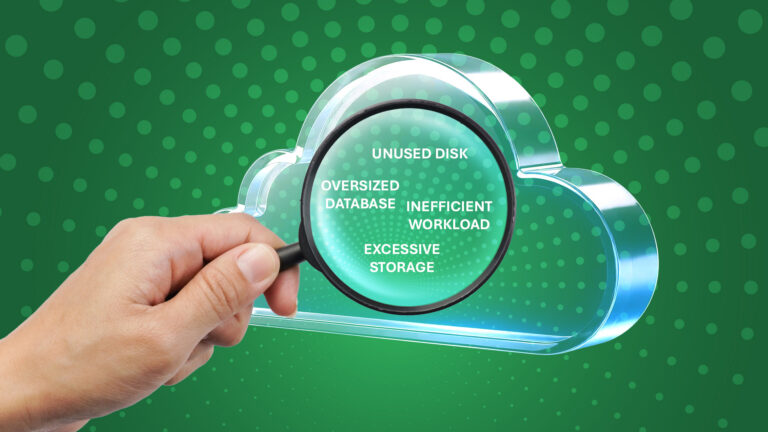
Its successor is the native Azure Carbon Optimization tool, which is baked directly into the Azure Portal. Instead of vague, top-down estimates, this tool uses AI to analyze your live subscriptions and point out exactly where money and energy are being wasted. It highlights idle virtual machines, flags over-provisioned databases, and provides developer-friendly REST APIs to stream these metrics straight into your engineering dashboards.
Moving Forward with ClinkIT Solutions
Cleaning up your software architecture isn’t just an exercise in corporate sustainability—it’s a direct strategy for lowering your operating costs and making your apps faster.
For companies looking to modernize without interrupting daily operations, a specialized partner makes all the difference. As a six-time Gold Microsoft Partner, ClinkIT Solutions helps enterprises audit their existing setups, run Green SEO evaluations, and implement modern .NET patterns like DATAS and Native AOT.
By building efficient, lean software, you ensure your business is fast, cost-effective, and fully optimized for the modern cloud era.
Let’s build smarter campaigns together. Reach out to our team today.
Whether you’re starting from scratch or optimizing what you already have, we’ll help you turn great ideas into powerful, high-performing digital experiences.