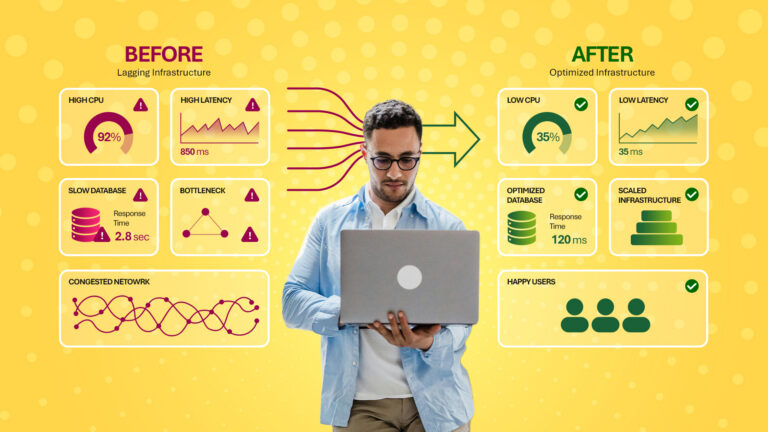
The digital landscape of 2026 has officially moved past the “AI-experimentation” phase. We are now living in a fully AI-native economy where PHP and MySQL Integration, data velocity, and backend security aren’t just IT metrics—they are the definitive benchmarks of whether a company thrives or fades into irrelevance.
For the modern enterprise, the integration between PHP and MySQL has evolved. It’s no longer just about “making the site work”; it’s the central nervous system of your brand’s story. At ClinkIT Solutions, we see this every day: the gap between generic “out-of-the-box” setups and high-performance, bespoke architectures is widening into a canyon.
Here is how you master the flow of data in 2026 to ensure your infrastructure is fast, scalable, and most importantly resilient.
The 2026 Ecosystem: Beyond “Standard” Coding
In 2026, the line between a “logistics company” and a “tech company” has vanished. Your web infrastructure is your primary conduit for customer intelligence. While the PHP/MySQL stack still powers roughly 74% of the web, the way we use it has undergone a radical shift.
We’ve moved into an era of Just-In-Time (JIT) compilation and asynchronous I/O. If your stack is still running on legacy patterns from 2022, you’re likely hitting bottlenecks that frustrate users and tank your SEO.
The Architectural Shift: 2023 vs. 2026
| Feature | Legacy Approach (Pre-2023) | Modern Standard (2026) | Business Impact |
| Execution | Synchronous (Blocking) | Asynchronous (Non-blocking) | Massive throughput gains. |
| Logic | Procedural “Spaghetti” | PSR-12 / Clean OOP | Lower maintenance costs. |
| Security | Manual Escaping | Prepared Statements / WAF | Immunity to agentic AI threats. |
| Scaling | Vertical (Bigger Servers) | Horizontal (Read Replicas) | Infinite elasticity. |
PHP 8.4: Reducing the Boilerplate Tax
The release of PHP 8.4 was a gamechanger for backend logic. It introduced features that finally killed the “boilerplate” code that used to bloat our repositories.
- Property Hooks: You can now define custom logic for getting and setting properties directly in the class. No more writing endless getName() and setName() methods just to format a string.
- Asymmetric Visibility: This allows a property to be public for reading but private for writing. It’s a simple change that massively protects data integrity—ensuring that a user’s record from MySQL can’t be tampered with by external logic.
Pro Tip: Use Lazy Objects (new in 8.4) for complex relationships. If you have a “Post” with 500 “Comments,” lazy initialization ensures you only fetch those comments from the database if and when they are actually needed.
Choosing Your Bridge: PDO vs. MySQLi
The bridge between your code and your data is the driver. While some still cling to MySQLi for its slight performance edge (roughly 2.5% to 6.5% in specific benchmarks), PDO (PHP Data Objects) remains the gold standard for enterprise-level work.
Why PDO wins in 2026:
- Database Agnostic: If you ever outgrow MySQL and need to move to PostgreSQL, PDO makes the transition painless.
- Named Placeholders: Using :username instead of a generic ? makes your queries readable and debugging significantly faster.
Performance: From OPcache to Asynchronous Mastery
High-velocity data requires a multi-layered performance strategy. In 2026, OPcache is a baseline requirement, but the real “secret sauce” is how you handle I/O.
Overcoming the Blocking Barrier
Traditionally, PHP waits for a MySQL query to finish before moving to the next line of code. In high-traffic environments, this is a killer. Modern frameworks like Swoole or ReactPHP use event loops to allow “cooperative multitasking.”
By using Fibers (introduced in 8.1 and refined since), developers can write async code that looks like standard synchronous code, avoiding the “callback hell” of the past.
Security in the Age of Agentic AI
Securing data in 2026 isn’t just about stopping SQL injection; it’s about defending against automated, AI-driven probes.
- Prepared Statements: This is non-negotiable. By separating SQL logic from data, you eliminate the primary vector for SQLi.
- Principle of Least Privilege: Your web application should never use the ‘root’ database user. Create dedicated users with specific permissions (e.g., no DROP TABLE rights).
- Modern Hashing: If you aren’t using Argon2 or Bcrypt for passwords, your data is a liability waiting to happen.
Technical SEO: The Backend is Your Ranking Factor
Many people think SEO is just keywords. In reality, Google’s 2026 crawlers prioritize Core Web Vitals that are directly impacted by your PHP/MySQL integration.
- First Contentful Paint (FCP): If your PHP logic takes 2 seconds to generate HTML because of an unoptimized MySQL query, your ranking will drop.
- Crawling Efficiency: Fast server response times allow search engines to index more of your site in less time.
The ClinkIT Approach
At ClinkIT Solutions, we believe in taking complexity off your plate. Whether it’s building an intelligent intranet, a bespoke e-commerce platform on Shopify/WordPress, or a microservice-ready backend in Laravel, our focus is on future viability.
We don’t just build for today; we build for the high-velocity, AI-native world of tomorrow.
Let’s build smarter campaigns together. Reach out to our team today.
Whether you’re starting from scratch or optimizing what you already have, we’ll help you turn great ideas into powerful, high-performing digital experiences.
Clink With Us!