The search landscape is undergoing a massive transformation, making an actionable Playbook for Generative Engine Optimization essential for digital survival. If your digital strategy relies exclusively on keyword density and fighting for “ten blue links,” you are optimizing for an ecosystem that is rapidly fading.
Today’s users demand immediate, synthesized answers from intelligent agents like ChatGPT
, Perplexity, Claude, and Google’s AI Overviews. Scaling organic growth in 2027 requires a shift from traditional SEO to Generative Engine Optimization (GEO). Here is how forward-thinking brands are adapting.
The Tri-Layer Search Landscape
Users are asking complex, conversational questions. To survive, your digital marketing must embrace a tri-layered approach:
| Discipline | Primary Objective | Target Platforms | Key Success Metric |
| SEO (Search Engine Optimization) | Rank on traditional SERPs | Google, Bing | Click-through rates (CTR) |
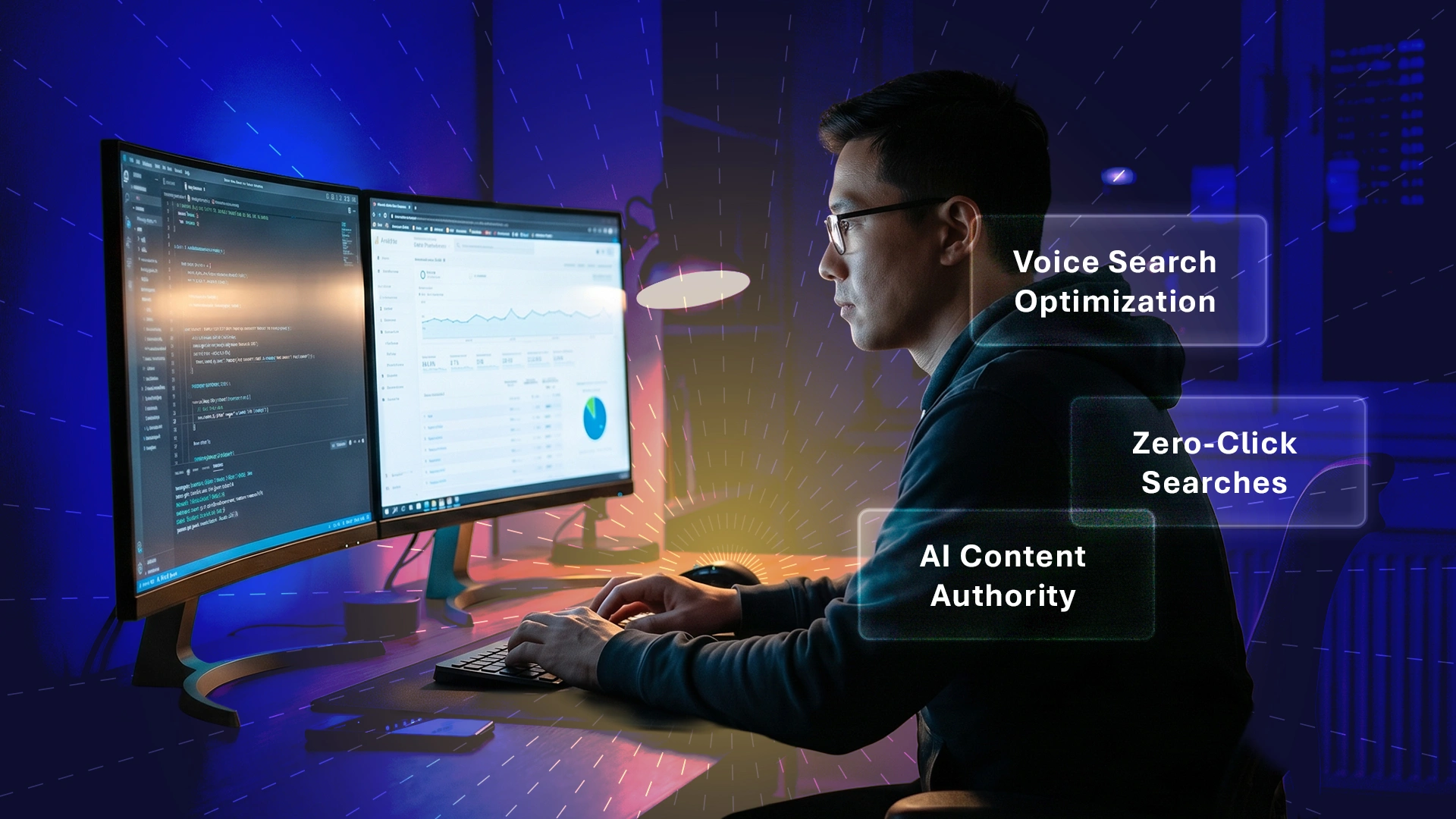
| AEO (Answer Engine Optimization) | Provide direct answers for factual queries | Featured Snippets, Voice Assistants | Zero-click visibility |
| GEO (Generative Engine Optimization) | Be cited and synthesized in AI responses | ChatGPT, Perplexity, Claude, AI Overviews | Share of Model (SoM) |
Success in GEO is about competing to become the most verifiable, trusted entity in an AI’s training data. When an AI evaluates a prompt, it breaks it into smaller sub-queries and finds the clearest source for each piece.
Structuring Content for the “Answer-First” Era
AI models prioritize structural clarity. The best way to secure citations is the “Answer-First” page design.
State the user’s precise question in an H2 or H3 heading, followed immediately by a direct, factual answer in two to three crisp sentences. Your content must pass the Two-Sentence Test: if an AI model lifts a single paragraph, it must function as a standalone, factual response.
Research shows specific additions directly influence AI citation rates:
- Citing Authoritative Sources (+40% visibility): Outbound links allow AI engines to trace the provenance of your facts.
- Adding Statistics and Data (+37% visibility): Verifiable numbers force models to rely on your source material.
- Including Expert Quotations (+30% visibility): Extractable soundbites are exactly what LLMs look for to validate answers.
- Precise Technical Terminology (+28% visibility): Industry nomenclature helps the AI map entity relationships.
Technical Readiness and the llms.txt File
A brilliant content strategy is useless if an AI crawler cannot physically parse your website. Heavy reliance on client-side JavaScript is a massive blind spot; JavaScript-rendered content fails AI parsing 77% of the time. You need clean, semantic HTML and server-side rendering (SSR).
Furthermore, 2027 requires the adoption of the llms.txt specification. Hosted at the root of your domain, this Markdown-formatted file acts as an onboarding guide for LLMs. It points language models directly to your highest-value information, stripping away CSS, navigation menus, and visual styling that consume valuable token budgets.
Digital PR and the “Implied Link”
In legacy SEO, a hyperlink was a “vote.” In the GEO era, authority means multi-source consensus.
Generative engines evaluate authority by looking for your brand across the entire digital ecosystem. Owned media (your website) accounts for less than 5% of the citations used by AI to describe your brand. Upwards of 85% come from earned media, PR wires, and user-generated content (UGC) platforms like Reddit. You must have experts natively answering questions in industry forums to provide the real, experiential insights that AI models trust.
Measuring Share of Model (SoM)
Because AI engines directly answer queries, traditional CTRs are plummeting. Measuring success requires a new KPI: Share of Model (SoM).
SoM calculates the percentage of AI-generated responses within a specific topic cluster that explicitly mention your brand. To track it effectively:
- Define the Prompt Universe: Identify 30-50 conversational queries representing actual user intent.
- Execute Across Engines: Query these prompts frequently across ChatGPT, Perplexity, Claude, and Google AI Overviews.
- Record Citation Data: Document mention frequency, your brand’s position in the answer, and the exact URLs the AI utilized.
- Analyze Sentiment: A high volume of negative mentions actively damages your brand in AI shortlists.
- Segment by Platform: Tailor your technical efforts based on where you are—and aren’t—getting cited.
By modernizing your technical infrastructure, restructuring content for machine synthesis, and cultivating authentic multi-source authority, you can successfully engineer organic growth in the generative era.
Let’s build smarter campaigns together. Reach out to our team today.
Whether you’re starting from scratch or optimizing what you already have, we’ll help you turn great ideas into powerful, high-performing digital experiences.