In the 2026 digital economy, the distinction between a “business” and a “technology company” has effectively vanished. Whether you’re selling logistics solutions or luxury retail, your web infrastructure—and the Web Development Approach behind it—is the central nervous system of your brand.
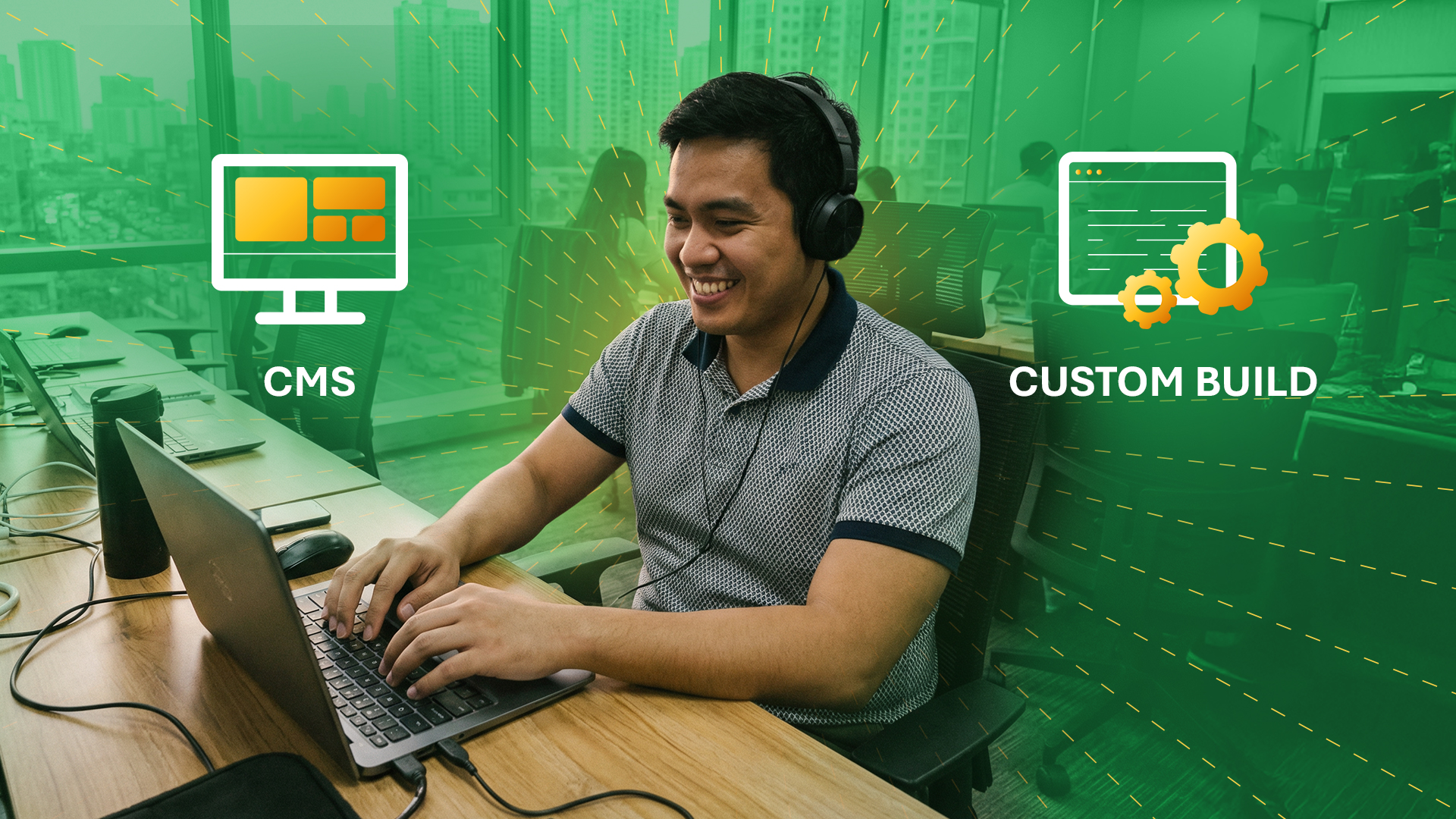
But as we navigate this landscape, a critical strategic question remains: Do you buy a pre-packaged Content Management System (CMS) or build a custom solution from the ground up?
The answer isn’t just about your budget for Year 1; it’s about your agility in Year 5. This isn’t a choice between “cheap” and “expensive”—it’s a choice between a commodity utility and a proprietary asset.
1. The CMS Landscape: Efficiency vs. The “Ceiling”
Platforms like WordPress, Drupal, and Shopify power a massive chunk of the web for a reason: they are built for generalization. They allow a marketing team to launch a professional site in weeks without writing a line of code.
The Architecture of Convenience
A CMS uses a “one-size-fits-all” model. It’s designed to handle everything from a local bakery’s blog to a mid-sized e-commerce store.
- The Pro: Rapid “Time to Value.” You get themes, plugins, and a familiar interface immediately.
- The Con: The Con: Bloat. Because the core system is generic, it loads code for features you aren’t even using. This creates a “performance tax” that penalizes your Google Core Web Vitals.
The “Plugin Hell” Problem
While the plugin economy is vast, it introduces Technical Debt. In a CMS, you might rely on 30 different third-party plugins. Each is a potential security hole or a conflict waiting to happen during the next update. At the enterprise level, “Plugin Hell” isn’t just a nuisance; it’s a liability.
2. Custom Development: Engineering Your Competitive Moat
Custom web development is often misunderstood as “reinventing the wheel.” In reality, modern frameworks—specifically the Microsoft .NET stack—provide the “plumbing” (security and routing) while allowing you to build the “house” exactly to your specifications.
Why Bespoke Wins in 2026
- Intellectual Property: When you build custom, you own the code. It’s an asset on your balance sheet, not a monthly subscription to a SaaS vendor who can hike prices or deprecate features.
- Performance Physics: A custom application only sends the code required for the task at hand. There is no “unused JavaScript.” Queries are direct and indexed. In a world where a 100ms delay costs millions in conversions, speed is a zero-sum game.
- Security by Design: CMS platforms are “loud” targets because they are ubiquitous. Custom builds have a unique architecture, making them far less susceptible to the automated bot attacks that plague WordPress.
3. The Economic Reality: Total Cost of Ownership (TCO)
A superficial look suggests CMS is cheaper. But if you look at a 5-year horizon, the math shifts.
| Cost Category | CMS (e.g., WordPress) | Custom Build (.NET/React) |
| Initial Build | Lower ($10k – $50k) | Higher ($40k – $150k+) |
| Maintenance | High (Forced updates/patching) | Low (Stable code/planned features) |
| Technical Debt | High (The “Re-platforming” event) | Low (Incremental refactoring) |
| Scalability | Vertical (Bigger Servers) | Horizontal (Auto-scaling Cloud) |
The “MVP Trap”: Many startups use a CMS for their prototype (MVP), which is smart. However, keeping that same architecture as you scale into a $100M enterprise is a recipe for a “Re-platforming” disaster in Year 3.
4. The Hybrid Revolution: Headless & Composable
The binary choice is dying. Many forward-thinking companies are moving toward Headless Architecture.
In this model, you use a CMS (like SharePoint or Contentful) purely to store your text and images (the “Headless” part), while your frontend is a high-performance custom build using React or Blazor. This gives marketing teams the ease of editing they crave while giving engineers the performance and security of a custom stack.
5. Strategic Verticals: Where it Matters Most
- FinTech & Healthcare: For these sectors, data sovereignty is non-negotiable. Custom development allows for column-level encryption and immutable audit logs that are nearly impossible to retrofit into a generic CMS.
- High-Volume E-commerce: Once you hit a certain transaction volume, the 0.5%–2% fees charged by SaaS platforms like Shopify Plus become more expensive than maintaining an entire in-house development team.
- Manufacturing/Logistics: These businesses often rely on legacy ERPs or SAP systems. A custom .NET Middleware layer is usually the only way to bridge the gap between “ancient” backend data and a “modern” user experience.
The ClinkIT Perspective: Choosing Your Path
As a Microsoft Gold Partner, ClinkIT Solutions doesn’t believe in a “one-size-fits-all” answer. We look at the business model first.
If you are building a site to tell people what you do, a CMS is your best friend. But if you are building a site to do what you do—to automate logic, integrate AI, and handle complex data—you need the precision of a custom build.
The most expensive mistake in 2026 isn’t the cost of the software; it’s the cost of the limitation. Choose the path that removes the ceiling from your potential.